A Research-Based Guide for Homeschooling in Early Childhood
Teaching Letters & Numbers the Right Way
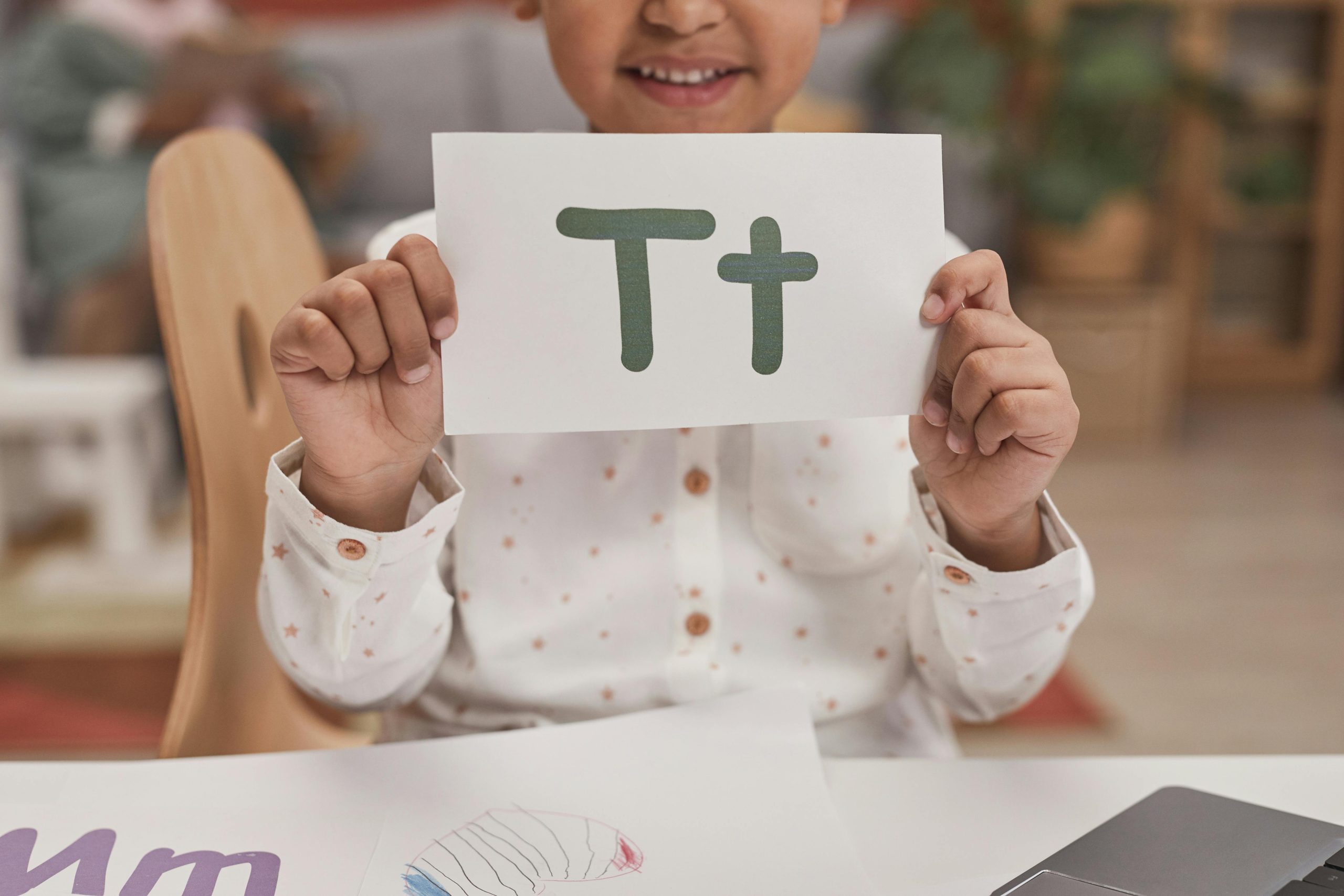
Teaching letters and numbers at home is one of the most important foundations in early childhood education. In homeschool environments, parents often feel pressure to begin early and move quickly. However, research consistently shows that how we teach letters and numbers matters just as much as when we teach them.
As an early childhood administrator, I encourage families to focus on developmentally appropriate, hands-on learning rather than memorization alone. When early literacy and math instruction align with how young children naturally learn — through play, repetition, and sensory experiences — children build stronger long-term foundations.
Why Early Literacy and Numeracy Matter
Early literacy and numeracy skills are predictive of later academic success. According to the National Early Literacy Panel, early skills such as alphabet knowledge and phonological awareness are strong indicators of future reading ability. They concluded that “oral language skills, phonological awareness, and alphabet knowledge were consistently related to later literacy outcomes” (National Early Literacy Panel, 2008).
Similarly, early math development plays a critical role in long-term achievement. Research indicates that “early math skills are a more powerful predictor of later academic success than early reading skills” (Duncan et al., 2007).
This means teaching letters and numbers at home is not just about kindergarten readiness! We are building the cognitive architecture for future learning.
How to Teach Letters at Home (Developmentally Appropriate Methods)
1. Focus on Letter Sounds Before Letter Names
Children benefit from connecting letters to sounds early. The National Reading Panel emphasized that “systematic phonics instruction produces significant benefits for students in kindergarten through sixth grade” (National Reading Panel, 2000).
In early childhood, this means:
- Teach the sound a letter makes before drilling the name.
- Use real-life objects (B is for ball, but let them hold a ball).
- Keep lessons short and interactive.
2. Use Multi-Sensory Learning
Young children learn through touch, movement, and visual engagement. The National Association for the Education of Young Children explains that developmentally appropriate practice includes teaching that is “age appropriate, individually appropriate, and culturally appropriate” (NAEYC, 2020).
Practical ideas:
- Form letters with playdough.
- Trace letters in sand or dirt.
- Build letters using sticks outside.
- Use sidewalk chalk.
When teaching letters at home, sensory engagement increases retention.
3. Introduce Letters in Meaningful Context
Rather than teaching letters alphabetically only, connect them to meaningful words:
- Child’s name
- Family members
- Favorite animals
- Everyday objects
Children are more motivated when learning feels relevant.
How to Teach Numbers at Home
1. Teach Quantity Before Symbol Recognition
Before focusing on written numerals, ensure children understand quantity. According to early childhood math research, “children’s understanding of number concepts develops through concrete experiences with counting and comparing objects” (Clements & Sarama, 2014).
Instead of worksheets:
- Count blocks.
- Count steps outside.
- Compare groups of snacks.
- Ask, “Which has more?”
Understanding what the number represents must come before recognizing the symbol.
2. Use Everyday Math Conversations
Math in early childhood should be embedded in daily routines.
Examples:
- “You have two shoes.”
- “Let’s cut this apple in half.”
- “We need three cups.”
Research shows early math language exposure significantly strengthens understanding. “Frequent math talk in early childhood supports later mathematical competence” (Clements & Sarama, 2014).
Homeschooling offers a major advantage here because children are immersed in real-life math constantly. My 2-year-old son will start counting his food, our shoes, his toy cars, and even our refrigerator magnets!
3. Encourage Pattern Recognition
Patterns are foundational to algebraic thinking. Young children benefit from identifying and creating simple patterns (ABAB, AABB).
Use:
- Colored blocks
- Nature objects
- Clapping rhythms
Pattern recognition strengthens logical reasoning and number sense.
How to Structure Letter & Number Learning in Homeschool
As a homeschool parent and advocate, I witness over and over again how structure provides security. Here’s a simple weekly rhythm that I love to use:
Monday
Introduce 1 letter + 1 number
Read related books
Wednesday
Hands-on activities (tracing, counting, building)
Friday
Review through games and movement
Keep sessions short:
- Ages 2-3: 2–5 minutes
- Ages 3–4: 5–10 minutes
- Ages 4–5: 10–15 minutes
Consistency matters more than duration.
Common Mistakes to Avoid
❌ Overusing worksheets
❌ Expecting mastery too quickly
❌ Skipping foundational skills
❌ Teaching abstract symbols before concrete understanding
❌ Comparing your child to others
The National Association for the Education of Young Children reminds educators that learning must be aligned with child development stages, not external pressure (NAEYC, 2020).
Signs Your Child Is Ready
Look for:
- Interest in books
- Recognizing letters in environment
- Counting objects spontaneously
- Asking “What number is that?”
- Sorting and grouping objects
Readiness matters more than age.
Turning Your Curriculum into a Strong Early Literacy & Math Foundation
If you are using a homeschool curriculum, evaluate:
- Does it include hands-on learning?
- Does it encourage repetition?
- Does it move from concrete to abstract?
- Does it include review cycles?
You do not need to rush through lessons. Early childhood learning should feel joyful, not pressured.
Teach Foundations, Not Just Facts
Teaching letters and numbers at home is not about racing toward reading or arithmetic. It is about building neural pathways through meaningful interaction, repetition, and play.
When instruction aligns with research and child development, homeschool environments can provide exceptional early literacy and numeracy foundations. Children who learn through movement, conversation, and exploration retain more and develop confidence along the way.
References (APA 7)
Clements, D. H., & Sarama, J. (2014). Learning and teaching early math: The learning trajectories approach. Routledge.
Duncan, G. J., et al. (2007). School readiness and later achievement. Developmental Psychology, 43(6), 1428–1446.
National Association for the Education of Young Children. (2020). Developmentally appropriate practice position statement.
National Early Literacy Panel. (2008). Developing early literacy: Report of the National Early Literacy Panel.
National Reading Panel. (2000). Teaching children to read: An evidence-based assessment of the scientific research literature on reading and its implications for reading instruction.
Photo by Werner Pfennig
Leave a Reply