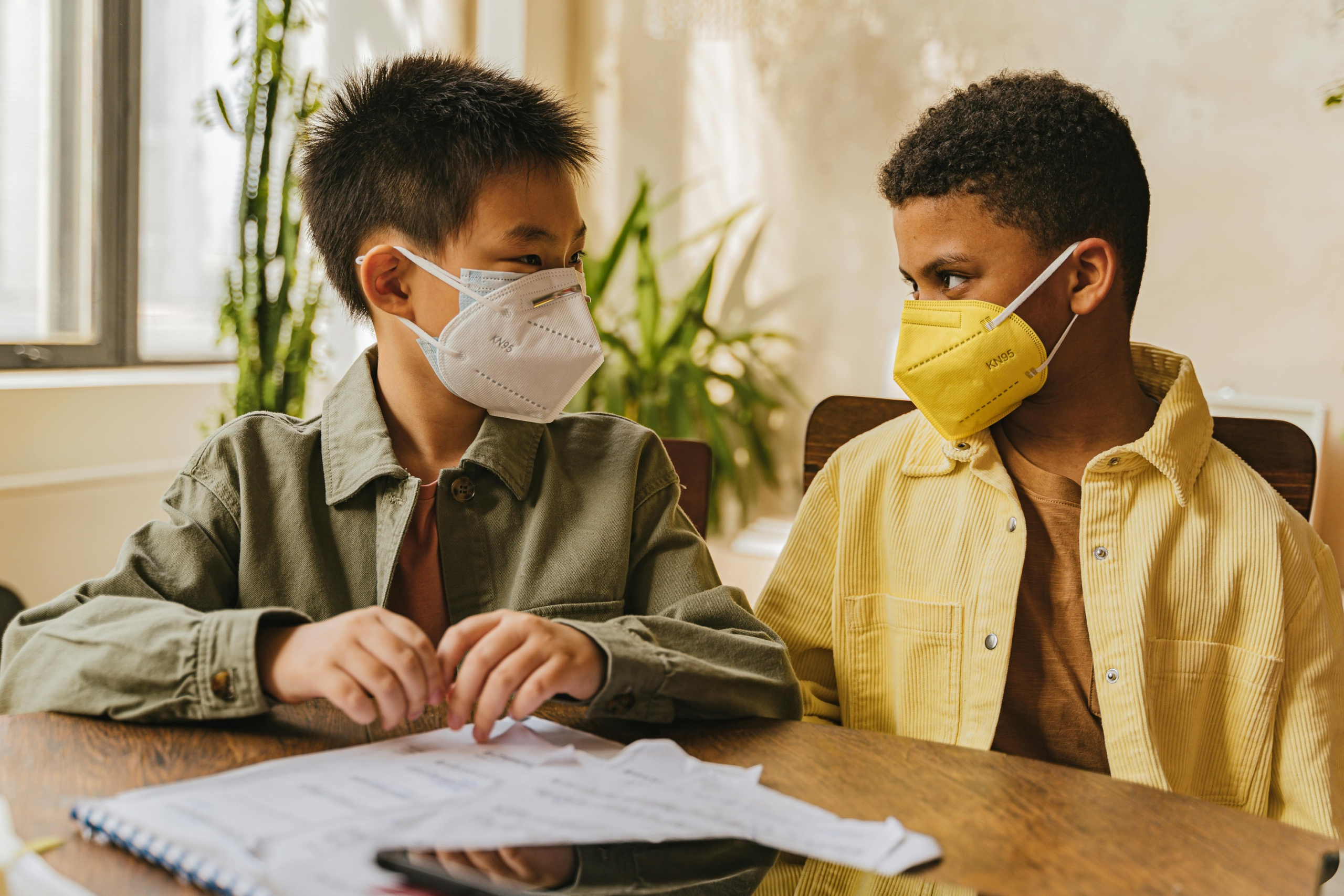
I. Introduction
Understanding the Education Impact of COVID-19
We all felt the impact and shift the COVID-19 pandemic had on our daily lives. Even moreso, this pandemic altered education worldwide in unprecedented ways. Schools closed, instruction moved online, and families were forced to reimagine learning environments. According to U.S. Census Bureau data, “nearly 93% of people in households with school-age children reported their children engaged in some form of ‘distance learning’ from home” (McElrath, 2020) during early pandemic disruptions.
This widespread shift is one of the clearest indicators of the pandemic’s impact on education. Beyond temporary changes, these experiences reshaped expectations about flexibility, parental involvement, and instructional delivery. From a homeschool perspective, the pandemic did not introduce entirely new ideas, but it accelerated awareness of educational models that already prioritized adaptability and personalization.
Understanding how education changed requires examining the growth of homeschooling, academic outcomes, technology integration, and family decision-making patterns that emerged during this period.
II. Understanding the Education Impact of COVID-19
Homeschooling Growth and Family Educational Choices
One of the most visible indicators of pandemic-era education impact was the surge in homeschooling participation. Prior to COVID-19, homeschooling rates remained relatively steady, but national data showed significant change once disruptions began. The U.S. Census Bureau reported that “homeschooling is notably higher than the national benchmarks” (U.S. Census Bureau, 2021), and increased sharply as families sought alternatives that addressed health, childcare, and emotional needs.
Survey comparisons revealed homeschooling households rising from 5.4% in spring 2020 to 11.1% by fall of that same year, effectively doubling within months! Longer-term enrollment trends started to show that this was not merely temporary. News analysis of national enrollment data found homeschooling “surged by over 25% from fall 2019 to fall 2022”(Associated Press, 2023), highlighting sustained reconsideration of schooling options.
Even years later, participation levels remain elevated, with approximately 5.92% of U.S. school-aged children homeschooled during the 2023–2024 school year. From a homeschool educator’s perspective, these statistics demonstrate a shift in parental confidence and agency in directing children’s learning experiences! This was a huge defining aspect of pandemic education impact.
Academic Outcomes and Learning Disruptions
While educational access expanded in some ways, academic outcomes revealed challenges. Global research indicates school closures affected over one billion students and led to measurable declines in achievement. Scholars report “significant learning losses, particularly in mathematics and science” (Gajderowicz et al., 2025) with extended closures. Similarly, policy analysis of remote instruction outcomes found that regions relying heavily on online learning during closures had larger achievement declines…
At the classroom level, online participation challenges also emerged. Studies analyzing student engagement found that “most students are not fully involved during online classes due to technical issues, remote distance”(Ullah et al., 2023) and related barriers.
This dual reality reveals the complexity of COVID-19 education impact: technology expanded access while simultaneously exposing equity gaps and engagement barriers. For homeschooling families, this highlighted the importance of intentional instructional structure, hands-on learning, and individualized pacing.
Technology Integration and Digital Learning Transformation
Despite challenges, the pandemic accelerated technological adoption in education. Distance learning platforms, digital curricula, and virtual instruction became essential infrastructure. Researchers note that the educational shift toward online learning affected students’ academic experiences and emotional well-being, emphasizing how academic life factors shaped responses to remote instruction.
In some contexts, online instruction produced neutral or positive outcomes. Comparative research reported “equivalent or better student course performance as compared with pre-pandemic”(Besser et al., 2021) learning environments in certain settings. These mixed results reveal that technology’s educational impact depends heavily on implementation quality!
Long-Term Educational Reconsideration
Perhaps the most lasting transformation was the shift in family agency. The Census Bureau observed that school closures “dramatically shifted the way children were being educated” (McElrath, 2020).
Increased exposure to remote schooling also influenced parental decisions. Researchers concluded that “a one percentage point increase in the share of remote instruction… is associated with a 2.2 percentage point rise in homeschooling probability” (Dee & Murphy, 2025).
This data suggests that pandemic learning environments directly contributed to sustained homeschooling growth. The pandemic began to validate the adaptability of home-based education models while emphasizing the responsibility families carry in maintaining academic rigor and developmental balance.
III. Conclusion
Lasting Lessons from Pandemic Education Impact
COVID-19 reshaped education through enrollment changes, academic disruption, digital expansion, and increased parental engagement. Evidence shows distance learning adoption, homeschooling growth, and academic challenges were not isolated outcomes but interconnected transformations that continue to influence modern schooling.
What began as crisis management evolved into structural transformation. Education is no longer viewed solely as a physical institution but as a flexible ecosystem shaped by families, technology, and diverse instructional models. The pandemic highlighted both opportunity and responsibility, validating individualized approaches while reinforcing the need for intentional structure, developmental balance, and academic rigor.
Ultimately, the education impact of COVID-19 revealed that learning is not confined to institutions or buildings. Instead, it exists across adaptable environments shaped by families, educators, and communities working together to meet evolving student needs.
References
Gajderowicz, T., Jakubowski, M., Kennedy, A., Kjeldsen, C. C., Patrinos, H. A., & Strietholt, R. (2025). The learning crisis: Three years after COVID-19. arXiv. https://arxiv.org/pdf/2501.01260
Jakubowski M, Gajderowicz T, Patrinos HA. COVID-19, school closures, and student learning outcomes. New global evidence from PISA. NPJ Sci Learn. 2025 Jan 22;10(1):5. doi: 10.1038/s41539-025-00297-3. PMID: 39843518; PMCID: PMC11754741.
McElrath, K. (2020). Schooling during the COVID-19 pandemic. U.S. Census Bureau. https://www.census.gov/library/stories/2020/08/schooling-during-the-covid-19-pandemic.html
Nappo, R., Simeoli, R., Cerasuolo, M., Ciaramella, F., & Rega, A. (2024). The Impact of COVID-19 on Learning Loss in Elementary School Students: A Comparative Study of Academic Performance Across Grades. Education Sciences, 14(12), 1396. https://doi.org/10.3390/educsci14121396
National Home Education Research Institute. (2021). How many homeschool students are there in the United States pre- and post-COVID-19?
National Home Education Research Institute. (2022). How many homeschool students are there in the United States during the 2021–2022 school year?
National Home Education Research Institute. (2024). Research facts on homeschooling.
U.S. Census Bureau. (2021). Homeschooling on the rise during COVID-19 pandemic.
Education Next. (2023). New U.S. Census Bureau data confirm growth in homeschooling amid pandemic.
Haser, Ç. (2022). Tracing students’ mathematics learning loss during COVID-19 school closures. International Journal of Educational Development.
Conto, C. A., et al. (2021). Potential effects of COVID-19 school closures on foundational skills. PubMed Central.
Uğraş, M. (2023). Early childhood learning losses during COVID-19. Sustainability.
Fordham Institute. (2025). A new picture of modern homeschooling in America.
Homeschool Planet. (2024). Homeschooling trends and post-pandemic educational shifts.
Photo by Antoni Shkraba Studio
Leave a Reply