Why You Need One, How to Choose One, and What Makes the Right Planner Worth It
Why Homeschool Planning Matters More Than You Think
Homeschooling offers flexibility, freedom, and personalization, but it also requires intentional organization. Without structure, even the most well-designed curriculum can become overwhelming. So, what is a homeschool parent’s best friend? (Aside from a laminator) Homeschool Planners!
Research consistently shows that planning and organization directly influence learning outcomes. Educational research notes that “effective planning is a critical component of successful instruction” (Stronge, 2018). In homeschool environments, where parents serve as both teacher and administrator, structured planning becomes even more essential.
A homeschool planner is not just a notebook. It is a system. And when chosen wisely, it becomes one of the most powerful tools in your homeschool journey.
Why You Need a Homeschool Planner
1. Structure Reduces Stress
Homeschool parents juggle multiple roles: educator, caregiver, administrator, scheduler, and so much more. This is a recipe for motherboard overload! Research confirms that structured planning systems improve productivity and reduce cognitive overload. Studies show that “written planning improves goal achievement and task completion” (Matthews, 2015).
A homeschool planner:
- Clarifies weekly objectives
- Tracks lesson progress
- Prevents falling behind
- Reduces daily decision fatigue
This is essential for those not knowing where to start. Instead of wondering what to teach each morning, you open your planner and begin.
2. Planning Improves Academic Outcomes
Intentional instructional design leads to stronger learning continuity. According to educational leadership research, “clear instructional planning supports student engagement and achievement” (Marzano, 2007).
In homeschool settings, this means:
- Mapping scope and sequence
- Tracking skill mastery
- Revisiting missed objectives
- Aligning lessons to long-term goals
So, word of the week is: COHESION! A planner keeps learning cumulative, instead of scattered.
3. Record-Keeping Is Not Optional in Many States
Many states require homeschool families to maintain attendance records, grade documentation, and progress tracking. The National Home Education Research Institute explains that while laws vary, “most states require some level of documentation or record keeping” (Ray, 2021).
Without an organized system, record-keeping can become overwhelming at the end of the year. A strong homeschool planner simplifies compliance.
How to Choose the Right Homeschool Planner
Not all homeschool planners are created equally. Here’s what to look for:
✔ Lesson Planning Pages: Space to map daily or weekly lessons.
✔ Attendance Tracking: Hourly and annual logs (depending on your state).
✔ Grade Tracking: Quarterly or semester tracking.
✔ Reflection & Goal Pages: Progress evaluation improves long-term outcomes.
✔ Durable Format: You will use this daily, so quality matters.
Comparing Popular Homeschool Planners
Now that we have gotten the mouthful out the way, let’s briefly compare some widely used options.
1. The Well-Ordered Homeschool Planner
🔗 https://wellorderedhomeschool.com
This planner is known for its detailed planning pages and strong organization structure. It works well for families who prefer detailed scheduling layouts.
Strengths:
- Highly structured
- Detailed weekly spreads
Limitations:
- Does not include comprehensive record-keeping documents for multiple children
- Primarily planning-focused
2. The Homeschool Planner by Christianbook
🔗 https://www.christianbook.com
This planner offers a faith-based approach and general lesson tracking pages.
Strengths:
- Simple layout
- Affordable
Limitations:
- Limited built-in official record documentation
- Often requires supplemental record forms
3. Generic Homeschool Planners (Amazon or Printable Versions)
Generic planners often include weekly layouts and minimal tracking pages.
Strengths:
- Inexpensive
- Flexible
Limitations:
- Rarely include formal attendance logs
- Often lack grade documentation
- No long-term archiving structure
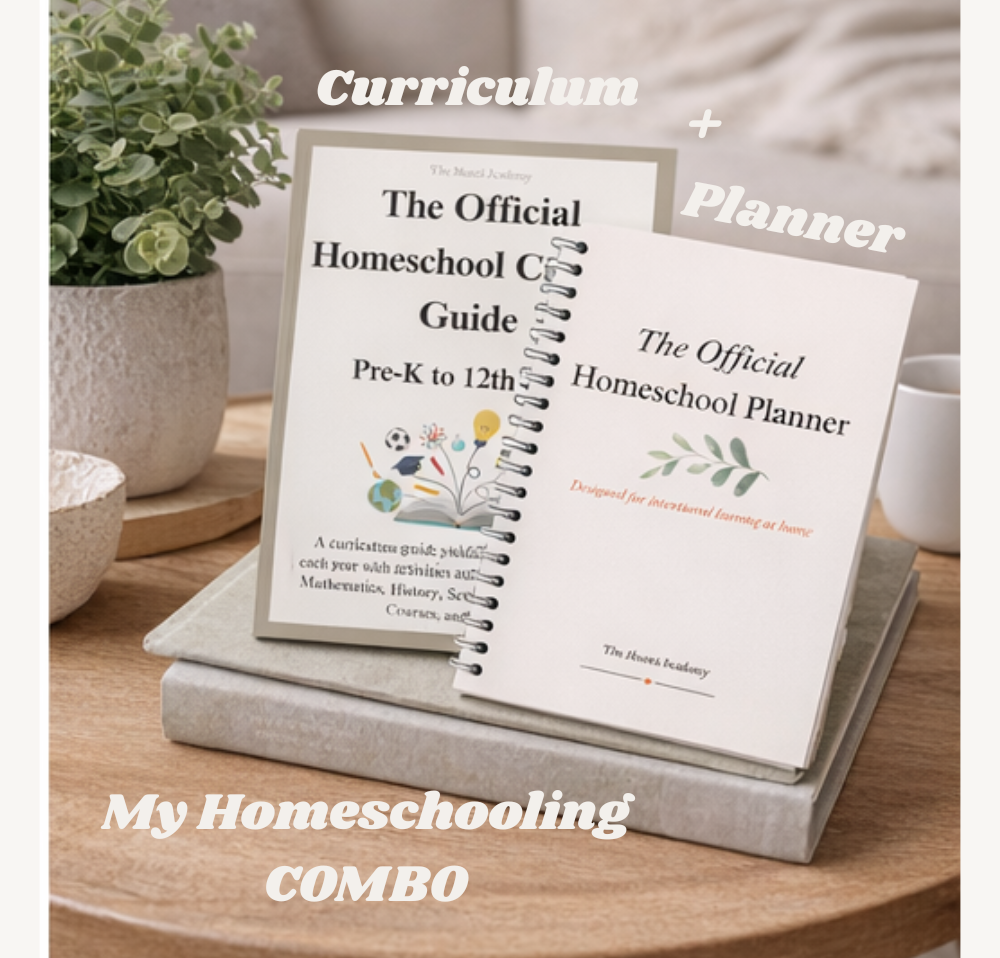
4. The Moneá Academy: The Official Homeschool Planner
🔗 The Official Homeschool Planner
This planner was designed from an early childhood administrative perspective — not just as a planning notebook, but as a full homeschool management system.
What sets it apart:
✔ Built-In Official Record-Keeping
Includes:
- Student grades
- Report cards
- Hourly attendance logs
- Annual attendance records
And it supports documentation for:
- Up to 3 children
or - Up to 3 academic years
That means one planner can function as both your daily planning tool and your official homeschool record archive.
✔ Three Format Options
Families can choose:
- Spiral-bound (flexible, easy to write in): HERE
- Hardcover (durable for long-term storage): HERE
- Paperback (lightweight & affordable): HERE
This flexibility allows families to choose what fits their homeschool style.
✔ Designed for Real Homeschool Families
Unlike generic planners, this planner integrates:
- Lesson planning
- Goal tracking
- Record-keeping compliance
- Portfolio-ready documentation
It bridges the gap between planning and accountability.
Why a Planner Matters Beyond Organization
Planning is not just about keeping neat pages.
It supports:
- Educational continuity
- Academic confidence
- Reduced parental stress
- State compliance
- Long-term student portfolios
Research on educational structure consistently shows that “organized instructional environments contribute to stronger academic performance” (Stronge, 2018). A homeschool planner creates that environment.
Planning Is a Form of Leadership
Homeschooling is leadership. When you plan intentionally, you are not just filling pages; however, you are designing your child’s educational experience.
The right planner:
- Saves time
- Reduces stress
- Protects compliance
- Strengthens academic flow
- Preserves records
Whether you choose The Official Homeschool Planner or another option, the key is choosing a system and not operating without one.
But if you want a planner designed from a homeschool parent and an educational administrator’s lens — one that includes full record documentation for up to three students or three years — The Moneá Academy’s Official Homeschool Planner offers both structure and security in one place!
References (APA 7)
Marzano, R. J. (2007). The art and science of teaching. ASCD.
Matthews, G. (2015). Goal setting and accountability research. Dominican University of California.
Ray, B. D. (2021). Homeschooling and state regulations. National Home Education Research Institute.
Stronge, J. H. (2018). Qualities of effective teachers. ASCD.
Photo by cottonbro studio